

SUBHASH CHANDRA: THE MAN BEHIND ZEE
by Vinta Nanda August 4 2026, 12:00 am Estimated Reading Time: 11 mins, 10 secsAt Essel Group’s centenary celebrations, Vinta Nanda revisits Dr Subhash Chandra’s remarkable journey with Zee Network, recalling defining moments, enduring relationships and a leadership philosophy that transformed the landscape of Indian entertainment forever.
Entering the Essel Group’s centenary celebrations at the Westin Hotel, Powai, Mumbai, being welcomed by the Chairman of the group, Dr Subhash Chandra ji, and then walking into the display of Zee Network’s achievements since 1992 was like stepping into a time capsule. Memories flooded back and nostalgia took over all senses and emotions. For those of us who had been part of the early years of Zee TV, this was not merely an exhibition chronicling the achievements of a television network. It was a reminder of an extraordinary period when Indian television was changing before our eyes, when possibilities were opening up almost every day and when none of us could have imagined the scale that the industry would eventually achieve.
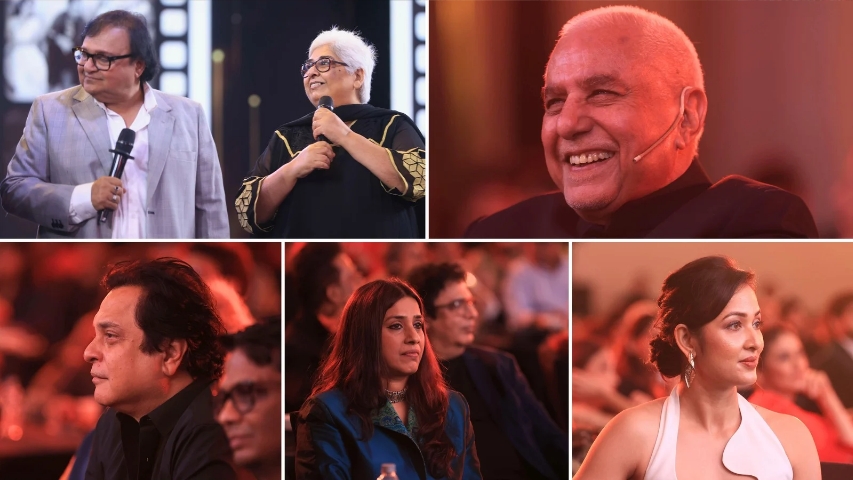
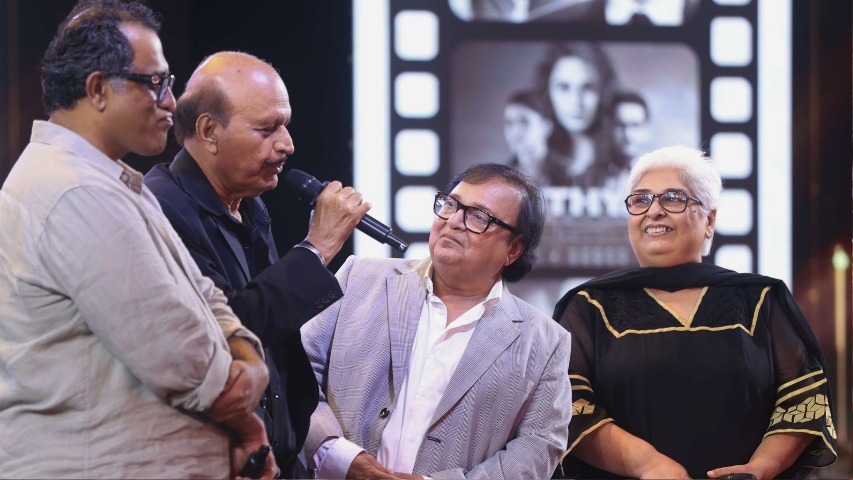
In his conversation with the audience, Subhash ji said that the evening was dedicated to Zee Network, one of the several verticals of the Essel Group, while all the other companies had their own respective functions. So, not surprisingly, over 500 people filled the room where nostalgia struck and we remembered Zee TV from the early days to now. Aparshakti Khurana and Rakesh Bedi were the moderators of the evening, leading the enthralled audience through stories from yore and the present, and gradually an entire era of Indian television came alive through memories, anecdotes and people who had shared that journey.
The People Who Created An Era
Bedi’s memories belonged to the series Tara, which ran from February 1993 to March 1997 on Zee TV, captivating audiences right through those years as the lives of four young women in urban Mumbai unfolded day after day. I believe we broke a record of sorts with both series, Tara and Tony and Deeya Singh’s Banegi Apni Baat – which were adapted and reworked to Western sensibilities later as Sex In The City and Friends, respectively. Looking back, what remains remarkable about those years is the freedom with which stories were being attempted and the enormous appetite audiences had for characters and situations that reflected a changing urban India.
No doubt Tony and Deeya Singh were present at the celebration, along with Deepak Ramsay, scion of the family which pioneered Horror storytelling in India and brought the country its first horror show on television – today Horror is perhaps one of the most popular genres of entertainment across the globe.
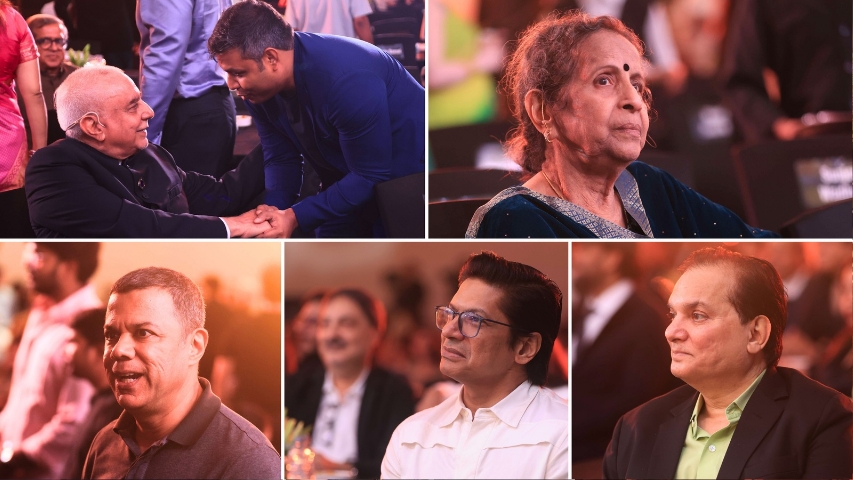
Karuna Samtani – the first employee of Zee TV – was very much there with Vivek Bahl, one of the first and most respected voices in television programming. So were Gulshan Sachdeva (Subhashji’s school mate and close friend), Shashi Ranjan, Sudhir Pandey, Avtar Gill, Anang Desai, Sapna and Samay Bhattacharya, Anurag Basu, Goldie Behl, Ajay Bhalwankar, the dapper Mahesh Thakur and the ever so lovely Nikki Aneja, singer Shaan, composers Jatin-Lalit, the stunningly beautiful Poonam Dhillon, an ageless charmer Anita Kanwal, and oh-so many others. If I were to start naming everyone who was there, this piece would run into pages and pages filled with celebrity names both veteran and new talent.
Meeting members of the present management and creative teams of the network, like Mangesh Kulkarni and Mrunalini Havaldar, brought with it another kind of nostalgia. It was like déjà vu, almost imagining oneself in those roles one played once upon a time, and realising at the same time how institutions continue through generations of people who inherit responsibilities once held by others.

When Thirty-Five Years Disappeared
Amid all this, there was one brief and deeply personal exchange which seemed to sum up the passage of time better than any elaborate reminiscence could. As Subhashji looked at me he said, “You’ve greyed…” Then he smiled, rubbed his head with his hand and added, “…so have I.” In that instant, one felt time stand still as both our eyes twinkled to recall how much younger we were 35 years ago. There was humour in the exchange, but there was also the recognition of how much had happened between then and now – in our lives, in television, in technology, in the country and in the institution that Zee had become.
That moment also brought back what has always distinguished my memories of Subhashji. Long before Zee became the enormous network and studio it is today, there was an unusual degree of personal involvement from the man at the helm. The evening brought several such stories back into the room.
The First Episode Of Tara
One of the dearest memories Rakesh Bedi recalled was of how Subhashji waited for hours at an editing suite to see the first episode of Tara. Raman Kumar, the director of Tara, was adamant that he would not show an unfinished episode to the boss, while Subhashji was equally adamant that he would not go away without seeing it.
So, as music tracks were placed and the mixing was done, Subhashji waited with Karuna and continued with his usual work until late into the night. Finally, when Raman Kumar was ready to show him the episode, he saw it and was thrilled. Such was Subhashji’s involvement with the channel, which I’m told still remains. I’m sure all the producers who’ve worked with Zee have similar stories to tell, because the story of Zee is inevitably also made up of countless stories about the people who created its programming and the involvement of the man who had taken the risk of building the network in the first place.
For me, however, there is another story about Subhashji that has remained far more than a memory. It became a professional lesson and, eventually, a way of approaching work and life.

A Lesson That Became A Mantra
When I was working at Zee as Director Programming in the early 2000s, I happened to be in Chandigarh to meet with the Zee Punjabi team. While I was there, I was informed by Subhashji’s office that he would be in the same city a couple of days later and that I should keep myself free to be with him and his entourage.
I went to the airport at about 12 noon to welcome Subhashji on the day and was thereafter part of his entourage to meet the Chief Minister of Panjab for a permission required. By the time the meeting with the CM took place and the permission was got, it was 5pm in the evening. There was just one last bit of work remaining: the signature of the bureaucrat in charge had to be obtained. Subhashji’s private flight back to Mumbai was ready and, naturally, we tried to convince him that the signature could be obtained the next day.
Subhashji insisted that he wanted it right away.
We went to the bureaucrat’s office only to learn that he had just left for the day. Instead of accepting that as the end of the matter, Subhashji requested the man’s address and we went to his house. At the official residence of the bureaucrat, we were told that he had just stepped out for his evening walk around Sukhna Lake. By then, one might reasonably have assumed that the job would have to wait until the following morning. Not Subhashji. He simply went to the lake with all of us following behind him.
He walked the entire boulevard until we found the bureaucrat at the end of its length, requested him for the signature and got it. The job was done.
As I dropped Subhashji at the airport for his flight back to Mumbai, he said to me, “Never leave what you can do today, for any tomorrow.”
It became my mantra from that day onwards. The drive, the patience and, sometimes, the stubbornness required to get a job done irrespective of the hurdles are what make a professional and, eventually, a successful person. What stayed with me was not simply what Subhashji had said, but the fact that I had just watched him practise it. There was a private aircraft waiting, the working day was over, the bureaucrat had left his office and then his home, and yet none of those circumstances was sufficient reason to leave an unfinished job for tomorrow.
How Zee Built A New Creative Tribe
The memories Subhashji shared at this momentous occasion offered fascinating insights into the instincts that shaped Zee Network in its formative years. He spoke about how he chose to work with newcomers and created a whole tribe of contemporary producers when faced with the issue of making ends meet. His research had told him that the established television producers of those days were too expensive and would not justify his spend on creating television shows.
What could have been regarded simply as a financial limitation became an opportunity to bring new people into television. Looking back at the extraordinary number of careers that emerged during that period, it is worth remembering that the growth of satellite television in India did not merely create channels. It created an entirely new creative ecosystem of producers, directors, writers, actors, technicians and programming professionals who would go on to shape popular entertainment for decades.
There was another extraordinary reminder of how different the relationship between television and its audience was in those years. Subhashji recalled how we waded through lakhs of letters and postcards that people from across India would send every day, for interactivity. This was before social media, instant audience analytics and the digital feedback loops that broadcasters take for granted today. People wrote letters. They sent postcards. And somebody at Zee read them.
One suggestion in a postcard that arrived at Zee Network was the birth of the most popular voice of our times, Shreya Ghoshal. That one memory alone captures something important about those pioneering years – the audience was not an abstract statistic. Somewhere in those lakhs of letters was an idea, an opinion, a talent waiting to be discovered or a direction in which television could move.
When A Room Gasped Together
Subhashji also recalled the economics of those beginnings, and one anecdote particularly captured how far the industry has travelled. When he told everyone at what price Ronnie Screwala’s UTV produced the first four shows commissioned on Zee TV, at first there was silence and then a collective gasp of surprise which broke into laughter.
That reaction probably said more about the transformation of the television business than any financial chart could. What began with comparatively modest resources would become an industry producing thousands upon thousands of hours of programming, employing enormous numbers of people and eventually competing for audiences in a global media environment.
Yet, throughout the evening, what emerged from Subhashji’s recollections was that Zee’s story was never only about scale. It was also about finding solutions when resources were limited, trusting newcomers, remaining close to the programming, listening to audiences and refusing to leave a task unfinished simply because circumstances had become inconvenient.
The Next Innings Of Zee Network
It is impossible to capture everything that Subhashji presented at this occasion in one article. There are too many stories, too many people, too many programmes and too many milestones contained within more than three decades of television history. But what I can say safely is this: it is unprecedented and unparalleled, the millions of hours of storytelling across diverse genres that Zee Network has achieved in 34 years.
More than that, with a billion-plus database under its belt, Zee Network is poised to roll out another outstanding innings. What began in 1992 as an audacious Indian television enterprise has travelled through extraordinary technological and cultural transformations, from satellite television to a media environment in which content moves seamlessly across screens, platforms, geographies and generations.
At the Essel Group’s centenary celebration, however, the enormity of that achievement became most meaningful through the smaller stories Subhashji told and those that others narrated about him.
The memory of a chairman waiting late into the night in an editing suite because he wanted to watch the first episode of Tara says as much about those beginnings as any corporate history. So does the decision to employ newcomers because established producers were unaffordable. So does the willingness to read what audiences were saying through lakhs of letters and postcards. And so does the image that remains indelible in my own mind – of Subhashji walking the boulevard at Sukhna Lake Chandigarh in search of one bureaucrat and one final signature because a job that could be completed today should not be left for tomorrow.
Perhaps that is also why, 35 years later, the simple exchange about our greying hair carried such resonance. We were younger then, certainly. So was Indian satellite television. The medium has grown up, generations have changed and Zee Network has travelled an extraordinary distance from those pioneering days.
At the centre of those memories remains Dr Subhash Chandra and the enterprise he set in motion – India’s first indigenous network and studio, which today walks shoulder to shoulder with the world’s best.



-173X130.jpg)
-173X130.jpg)

-173X130.jpg)

-173X130.jpg)

-173X130.jpg)